
Global software revenue is projected to exceed one trillion dollars by 2025, driven primarily by cloud-based delivery models. Market analysts report that enterprises prioritize scalable platforms that reduce infrastructure overhead. NEXINFINITY META delivers custom SaaS products engineered for speed, security, and predictable revenue. Our Guindy-based engineering team handles design, development, and growth under one roof. We eliminate hourly billing surprises by providing fixed, written estimates after a free discovery call. This guide explains how to structure your platform for long-term success.
Understanding Multi-Tenant Architecture
Core architectural principles
Multi-tenant architecture is a software deployment model where a single instance of the application serves multiple independent customers through isolated data partitions. This approach drastically reduces operational costs while maintaining strict data segregation. Each tenant receives dedicated configuration settings, custom branding, and isolated storage volumes. NIST research confirms that shared infrastructure reduces hardware expenditure by nearly forty percent. Our engineers implement row-level security and schema isolation to prevent cross-tenant data leakage. You retain complete control over tenant onboarding workflows and resource allocation limits.
We build these systems using modern frameworks that support horizontal scaling. Load balancers distribute traffic across containerized instances. Database sharding ensures that heavy usage by one client never degrades performance for others. Our custom SaaS development process includes automated provisioning pipelines that spin up new environments instantly. This architecture supports rapid user acquisition without proportional infrastructure costs.
Building Subscription Billing Systems
Pricing tiers and automated provisioning
Subscription billing is a recurring payment framework that automatically charges customers at predefined intervals while tracking usage limits and feature access. Modern platforms require flexible pricing models that support monthly, annual, and usage-based tiers. Revenue recognition must comply with ASC 606 and IFRS 15 accounting standards. McKinsey data shows that subscription-based software companies achieve higher customer lifetime value than one-time license models. We integrate payment gateways like Stripe and PayPal to handle recurring transactions securely. The system automatically generates invoices, manages dunning processes, and updates feature flags based on payment status.
Admin dashboards display real-time revenue metrics, churn rates, and active subscription counts. You can configure trial periods, discount codes, and promotional campaigns directly from the backend. Our billing modules support proration, upgrades, downgrades, and immediate feature activation. This flexibility allows you to experiment with pricing strategies without rebuilding core infrastructure. Explore our full service catalog to see how we structure financial modules for enterprise clients.
Designing Admin Dashboards and User Portals
Role-based access control
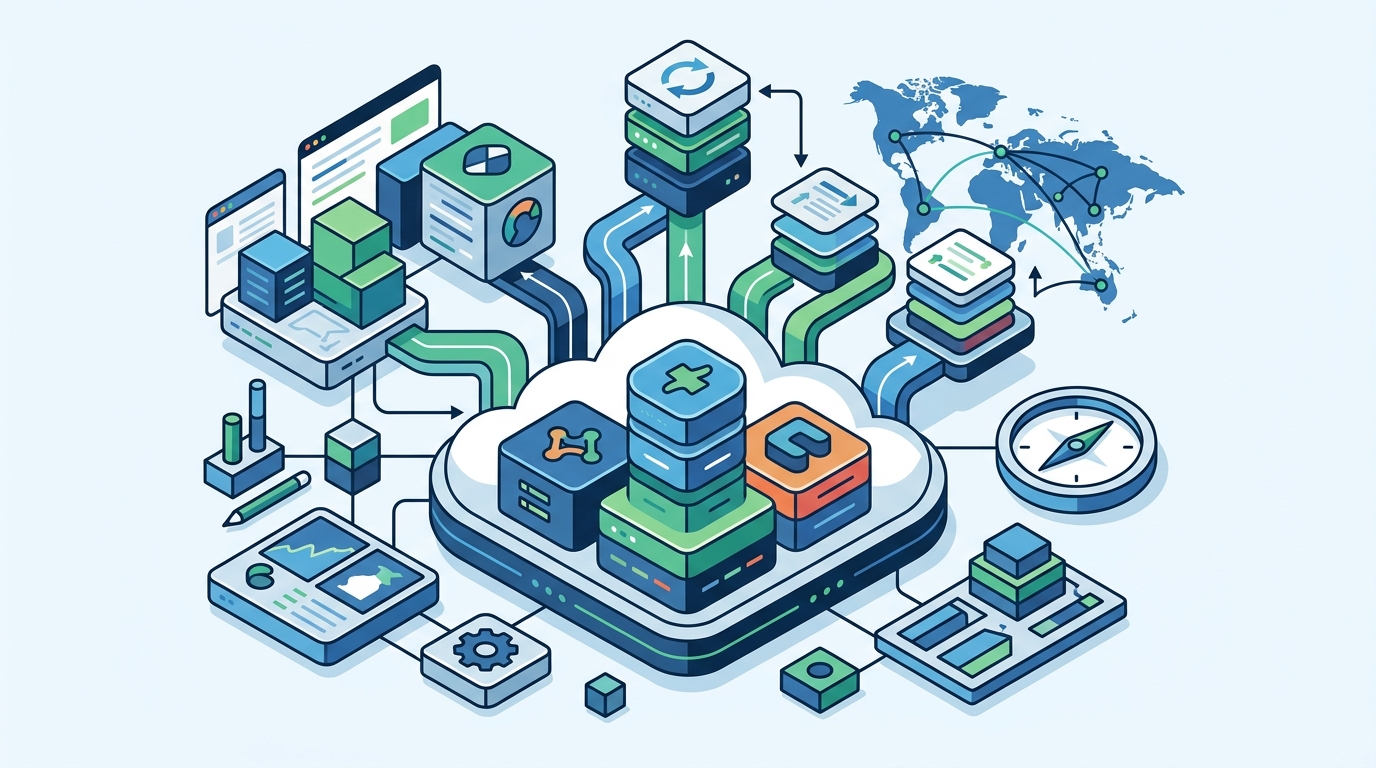
User portals require intuitive navigation, fast load times, and consistent branding across all devices. We prioritize research-driven interfaces that reduce cognitive load and accelerate task completion. Role-based access control ensures that administrators, managers, and end-users only see relevant data. Review our portfolio to see how we structure complex dashboards for healthcare, fintech, and logistics platforms. We implement granular permission matrices that prevent unauthorized data exports or configuration changes.
Customizable widgets allow users to arrange their preferred metrics on the home screen. Notification centers track system alerts, subscription renewals, and support tickets. We design these interfaces using component libraries that guarantee consistency across web and mobile applications. Accessibility standards like WCAG 2.1 are baked into every pixel. This approach reduces support tickets and increases user retention rates.
Integrating AI Automation and Cloud Infrastructure
Scalable DevOps and 24/7 monitoring
Cloud infrastructure is the foundational computing environment that provides on-demand servers, storage, databases, and networking resources over the internet. We deploy applications on AWS, Azure, or Google Cloud using containerized microservices. Infrastructure as Code ensures that environments remain identical across development, staging, and production. Cloud providers report that containerized workloads reduce deployment failures by over sixty percent. Our DevOps pipelines automate testing, security scanning, and rollback procedures. You receive 24/7 monitoring with automated alerting for CPU spikes, memory leaks, or database bottlenecks.
AI integration enhances user experiences through predictive analytics, automated customer support, and intelligent workflow routing. We build custom chatbots that handle tier-one inquiries while escalating complex issues to human agents. Machine learning models analyze usage patterns to recommend feature upgrades or identify churn risks. Our AI integration services include natural language processing, computer vision, and recommendation engines. We also provide 125+ free, privacy-first developer tools to accelerate your internal engineering workflows.
Development Pricing and Project Timelines
Fixed estimates versus hourly models
Traditional software agencies charge hourly rates that frequently exceed initial budgets. We operate differently by providing fixed, written estimates after a comprehensive discovery phase. Scope definition includes technical specifications, user stories, and acceptance criteria. Project timelines typically range from eight to sixteen weeks for standard SaaS platforms. Enterprise-grade systems with advanced compliance requirements may require twenty weeks. Contact us for a free project quote and receive a transparent breakdown of all deliverables. We never hide costs behind vague line items or surprise change orders.
Agile sprints deliver functional increments every two weeks. You review working software, provide feedback, and adjust priorities before the next cycle begins. This transparency eliminates guesswork and aligns technical execution with business objectives. Our single in-house team handles design, engineering, and growth to maintain consistency. You avoid the communication overhead of managing multiple external vendors.
Key Takeaways
- Multi-tenant architecture reduces infrastructure costs by nearly forty percent while maintaining strict data isolation.
- Subscription billing frameworks automatically handle recurring payments, proration, and feature flagging.
- Role-based access control prevents unauthorized data exposure across different user tiers.
- Containerized cloud workloads decrease deployment failures by over sixty percent.
- Fixed pricing models eliminate hourly billing surprises and align technical delivery with business budgets.
- AI automation improves customer retention by predicting churn and routing support tickets intelligently.
- Standard SaaS platforms require eight to sixteen weeks for full development and testing.
Platform Deployment Models Compared
| Architecture Type | Data Isolation Level | Infrastructure Cost | Best Use Case |
|---|---|---|---|
| Single-tenant | Complete physical separation | High | Enterprise compliance requirements |
| Multi-tenant | Logical partitioning | Low | Growing SaaS startups |
| Hybrid cloud | Split workloads | Moderate | Legacy system integration |
Frequently Asked Questions
How does multi-tenant architecture protect customer data?
Each tenant receives isolated database schemas or row-level security filters. Cross-tenant queries are blocked at the application layer. Encryption keys rotate automatically, and audit logs track every data access event. This structure ensures that one client never views another client records.
Can I modify pricing tiers after launch?
Yes. Our billing modules support dynamic tier creation, proration calculations, and immediate feature activation. You can adjust limits, add usage-based charges, or run promotional campaigns without redeploying core code.
What compliance standards do you support?
We implement SOC 2 Type II, HIPAA, GDPR, and PCI DSS controls. Data residency options allow you to store information in specific geographic regions. We conduct regular penetration testing and vulnerability assessments.
How long does the discovery phase take?
The discovery phase typically requires one to two weeks. We map user journeys, define technical constraints, and draft a fixed estimate. You receive a detailed scope document before any engineering work begins.
Do you offer ongoing maintenance and support?
Yes. We provide 24/7 monitoring, security patching, and performance optimization. Our support packages include dedicated account managers and priority bug resolution. You can scale support hours as your user base grows.
Can I migrate existing data to a new SaaS platform?
Absolutely. We build custom ETL pipelines that extract, transform, and load legacy data into your new architecture. We validate data integrity, run parallel testing, and execute zero-downtime cutover procedures.
Start Your Custom SaaS Project Today
Building a scalable software platform requires precise architecture, reliable billing infrastructure, and continuous optimization. NEXINFINITY META delivers end-to-end solutions that accelerate your time to market. Our Guindy-based team handles design, engineering, and growth under one roof. Schedule your free discovery call and receive a fixed, written estimate. We eliminate hourly billing surprises and deliver production-ready software on schedule. Visit our developer tools library to access 125+ privacy-first utilities. Book your project today and secure your competitive advantage.