

Modern mobile markets demand rapid deployment and consistent functionality across competing operating systems. Industry reports indicate that cross-platform frameworks now power over sixty percent of enterprise mobile applications globally. This shift toward unified development architectures directly addresses the rising costs of maintaining separate engineering teams. Organizations adopting a single codebase strategy consistently report faster release cycles and reduced operational overhead. Strategic alignment between engineering and product roadmaps remains critical for sustained digital growth.
Understanding the Single Codebase Architecture
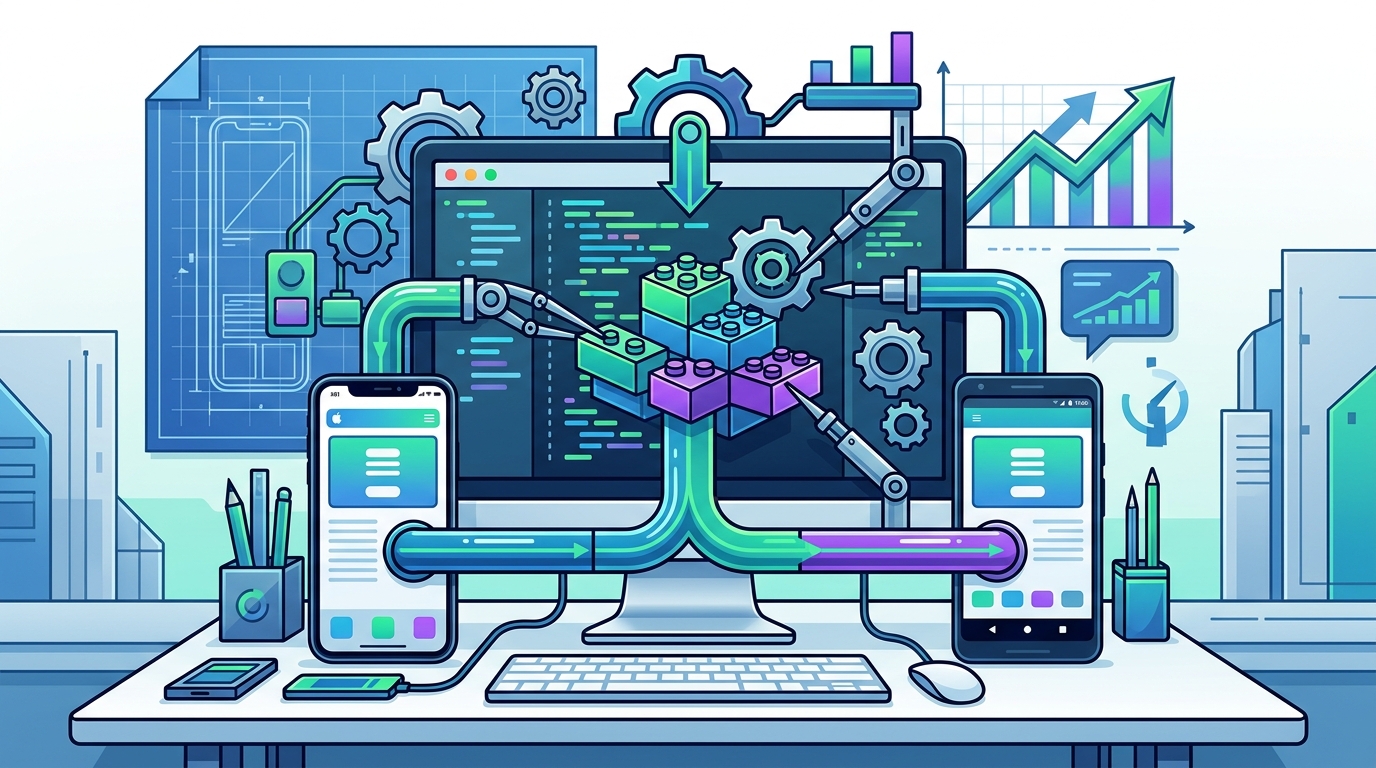
A single codebase architecture represents a unified software engineering model where developers write one set of source files that compiles into multiple native applications. This approach eliminates redundant logic duplication by abstracting platform-specific rendering engines behind a shared interface layer. Developers focus on core business logic rather than rewriting identical functions for separate operating systems. The underlying framework translates shared instructions into native device commands during the build process. This architectural pattern directly enables faster iteration and streamlined debugging workflows.
Accelerated Development Cycles and Time to Market
Engineering teams utilizing a unified repository consistently deliver functional prototypes within half the timeframe required by traditional methods. Shared component libraries allow developers to reuse interface elements across both mobile platforms without rewriting markup. Product managers benefit from synchronized release schedules that eliminate staggered launch dates. Market entry velocity becomes a decisive competitive advantage when customer acquisition costs continue to rise. Companies can now validate product market fit before committing to extensive marketing campaigns.
Unified Maintenance and Reduced Technical Debt
Technical debt is the accumulated cost of rework caused by shortcuts taken during initial development phases. A unified repository ensures that bug fixes and feature updates propagate instantly to all target platforms. Security patches require deployment to a single location rather than multiple isolated environments. Compliance audits become significantly simpler when version control tracks changes across one primary branch. Engineering managers report fewer regression errors during quarterly release cycles.
Consistent User Experience Across Operating Systems
User interface consistency is the standardized presentation of navigation flows, typography standards, and interaction patterns across all devices. A single codebase guarantees identical navigation flows, typography standards, and interaction patterns across all devices. Brand guidelines translate directly into the final application without platform-specific interpretation errors. Customer support teams handle fewer platform-specific complaints when interface behaviors remain predictable. User acquisition campaigns convert more effectively when onboarding experiences match marketing promises exactly.
Cost Efficiency and Resource Allocation
Financial models for mobile application development shift dramatically when engineering resources consolidate into a single workflow. Organizations eliminate duplicate licensing fees for platform-specific development environments and testing devices. Marketing budgets allocate more capital toward customer acquisition rather than redundant technical infrastructure. Project managers track progress through unified dashboards that display real-time deployment metrics. Financial forecasting becomes highly accurate when delivery timelines follow predictable engineering patterns.
Scalability and Future-Proofing Strategies
Application scalability depends on how efficiently new features integrate with existing architectural foundations. A unified repository simplifies the integration of artificial intelligence modules and cloud infrastructure services. Product roadmaps align with engineering capacity rather than fragmented platform constraints. Organizations can rapidly pivot toward emerging hardware standards without rebuilding core functionality. Long-term digital transformation initiatives require flexible architectures that adapt to shifting market demands.
| Development Approach | Code Repository Structure | Maintenance Overhead | Time to Market | Recommended Use Case |
|---|---|---|---|---|
| Single Codebase | Unified source files | Low | Rapid | Cross-platform enterprise applications |
| Native Development | Separate platform repositories | High | Extended | High-performance gaming engines |
| Hybrid Frameworks | Web view containers | Moderate | Variable | Rapid prototyping tools |
Key Takeaways
- Cross-platform frameworks now power over sixty percent of enterprise mobile applications globally.
- Engineering teams deliver functional prototypes within half the timeframe required by traditional methods.
- Security patches require deployment to a single location rather than multiple isolated environments.
- Organizations eliminate duplicate licensing fees for platform-specific development environments and testing devices.
- Application scalability depends on how efficiently new features integrate with existing architectural foundations.
- Companies adopting unified architectures consistently report faster release cycles and reduced operational overhead.
Frequently Asked Questions
Is a single codebase suitable for complex enterprise applications?
Yes. Modern cross-platform frameworks handle complex enterprise workloads by abstracting platform-specific rendering engines behind a shared interface layer. Engineering teams can integrate advanced security protocols and database connectors without compromising performance metrics.
How does unified maintenance impact long-term application costs?
Unified maintenance reduces long-term costs by eliminating duplicate licensing fees and consolidating testing environments. Organizations track progress through unified dashboards that display real-time deployment metrics across all target platforms.
Can a single codebase support native device hardware features?
Yes. Modern frameworks expose native device hardware features through standardized interface bridges. Developers access camera modules, biometric sensors, and location services without rewriting core application logic.
What happens when operating systems release major updates?
Operating system updates require minimal adaptation when applications follow standardized interface guidelines. Engineering teams update shared component libraries to maintain compatibility with new rendering engines and security protocols.
How do marketing teams benefit from synchronized release schedules?
Marketing teams benefit from synchronized release schedules by eliminating staggered launch dates and unified customer acquisition campaigns. Product managers track progress through unified dashboards that display real-time deployment metrics across all target platforms.
Does unified architecture support artificial intelligence integration?
Yes. Unified architecture supports artificial intelligence integration by providing standardized interface bridges for machine learning modules. Engineering teams can deploy predictive analytics and automated customer support workflows without platform-specific rewrites.
Start Your Unified Development Project
Transform your mobile strategy by consolidating engineering workflows into a single, high-performance repository. Our in-house team handles design, engineering, and growth to deliver production-ready applications across all major platforms. Schedule your free discovery call today to receive a fixed project estimate. Visit our AI integration services to explore advanced automation capabilities. Review our brand logo design portfolio to ensure visual consistency across all touchpoints. Visit our main services page to explore our complete portfolio of digital solutions.